Skip to content
Gold Coast Hinterland · 4228

Emergency Plumber Tallebudgera

Emergency plumber in Tallebudgera: the short answer

Almost every property in the Tallebudgera Valley runs its own water and wastewater, so an emergency plumber here works on rainwater tanks, pressure pumps, UV filters, septic tanks, aerated treatment systems and the long private pipes that join them, far more than on mains and council sewers. What fails is the pump that leaves the house dry, the trench that floods after a week of rain, and the pipe that cracks as the creek flats and hillsides move. Emergency work is $130-170 an hour at any hour with no separate call-out fee. Send the form with your system type and how to get in, and a licensed local plumber replies as soon as one is available.

Updated 8 October 2026

Postcode
4228
Region
Gold Coast Hinterland
Water and sewer
Mostly rainwater tanks and septic or aerated systems; City of Gold Coast on town-serviced streets, faults 1300 000 928 (24 hours)
Gas network
Bottled LPG on most acreage; Allgas only where reticulated. Leaks 1800 427 532; strong smell 000
Emergency rate
$130-170 an hour, any hour, no call-out fee
Housing
Acreage and rural-residential homes along Tallebudgera Creek Road and in the valley, larger modern homes on lifestyle blocks, a few older farmhouses and cottages, most on tanks and septic

24 Hour Plumbing in Tallebudgera, Gold Coast

Tallebudgera is a green valley running inland from Palm Beach along the creek, with acreage homes, hobby farms and lifestyle blocks, most of them off town water and sewer. It is a beautiful place to live and a demanding one to plumb.

What usually goes wrong in Tallebudgera

  • Rainwater tanks, pressure pumps and UV filters failing and leaving the house without water
  • Septic tanks, aerated wastewater systems and absorption trenches flooding after heavy rain
  • Long private pipe runs across creek flats and hillsides cracking with ground movement
  • Tree roots from creek-side figs and camphor laurels blocking drains
  • Stormwater and creek flooding in the wet season

Local notes for Tallebudgera

Almost every property in the Tallebudgera Valley depends on its own water and wastewater systems, so the emergency plumber's job is different from the coast. When a pressure pump fails or a tank runs dry the house has no water at all, and when a septic tank, aerated treatment system or absorption trench floods after a week of rain the wastewater has nowhere to go. Both happen most often in the wet season from December to March, and both need a plumber who understands pumps, filters, float switches and treatment systems rather than just mains and council sewers. Water and sewer runs on these blocks are long, often a hundred metres or more across creek flats, clay and rock, and they crack as the ground moves, so finding the break is half the job. The creek-side figs and camphor laurels send roots into every drain. Modern homes on the lifestyle blocks add pool plumbing, irrigation and multiple hot water units to the list of things that can fail. Tallebudgera Creek floods in heavy rain and cuts off parts of the valley, so response time depends on the weather as much as the traffic.

Housing in Tallebudgera

Acreage and rural-residential homes along Tallebudgera Creek Road and in the valley, larger modern homes on lifestyle blocks, and a few older farmhouses and cottages, most on rainwater tanks and septic or aerated treatment systems.

What goes wrong on Tallebudgera Valley acreage

Tallebudgera is a green valley running inland from Palm Beach along the creek, and the thing that makes it beautiful is the thing that makes it hard to plumb: there are few council pipes. The acreage homes along Tallebudgera Creek Road, the hobby farms and the larger modern homes on lifestyle blocks almost all collect water from the roof into tanks, pump it to the house through a pressure pump and filters, and treat their wastewater on site in a septic tank with trenches or an aerated treatment unit.

So an emergency plumber in Tallebudgera deals with a different list: a pump that has stopped and left the house dry, a UV filter that has failed, a trench that cannot drain, a treatment unit whose alarm is sounding, or a long pipe that has cracked somewhere across a paddock. The modern homes add pool plumbing, irrigation and more than one hot water unit, so there is simply more pipe to fail. The wet season from December to March is when most of it happens.

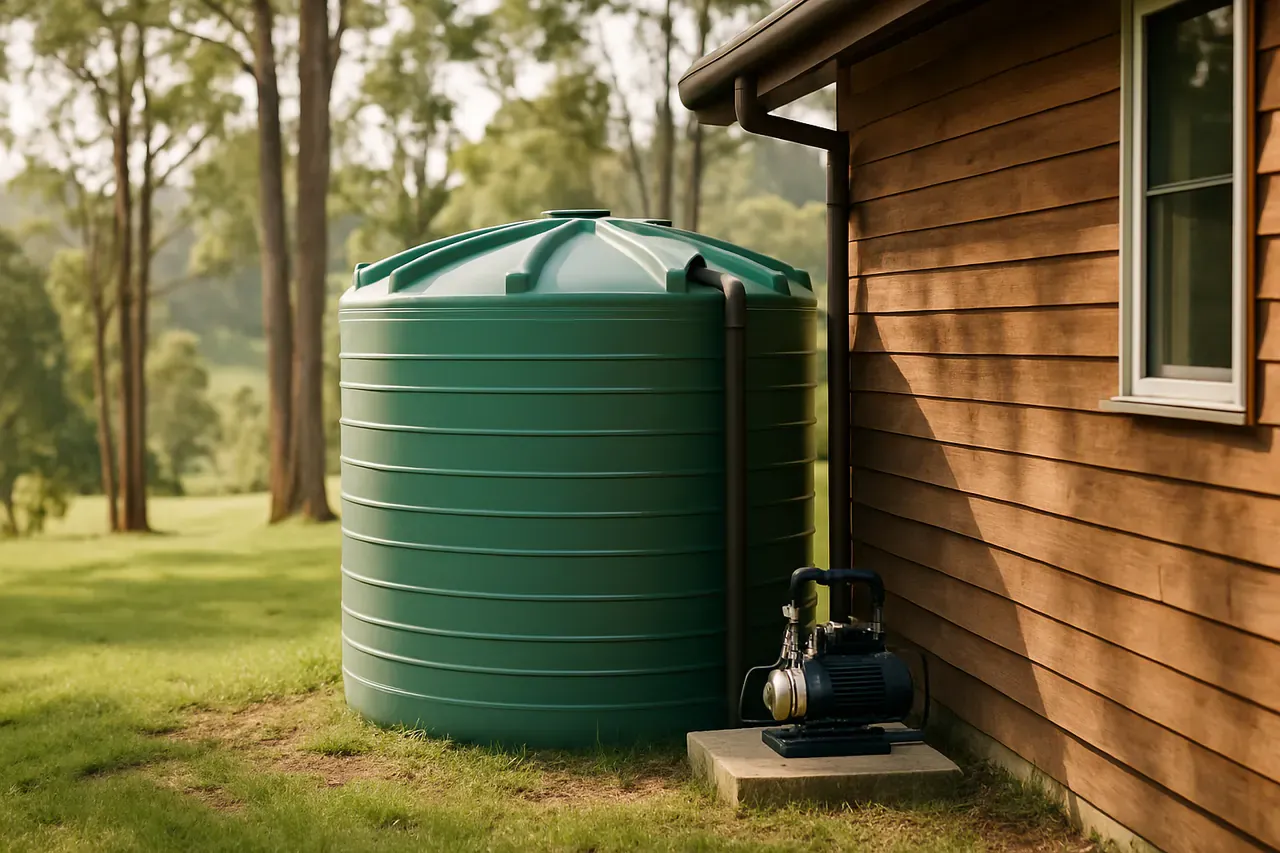
Timber house on acreage in a green valley with a rainwater tank, eucalyptus trees and mist on the mountains behind

A dry tap: tanks, pumps and UV filters

No water at all is the valley's signature emergency. Before you send the form, check three things: is the power on at the pump and the breaker intact, is there water in the tank, and is anything along the line hissing or wet. If the pump is running constantly and the pressure never comes, switch it off at the power point so it does not burn out; it is either a burst in the line or a tank that has run dry.

A pump that short-cycles has usually lost its pressure tank bladder or has a small leak downstream; one that is silent with the breaker intact has lost its motor or controller. A failed UV lamp will often shut the flow down on units with a safety solenoid, and a sediment filter choked after a storm washes the roof drops the pressure to a trickle. An emergency plumber who works the valley carries the common pump, switch and filter parts, with the price for any replacement given before it is fitted.

  • Pressure pump replacement$650-1,500
  • Burst pipe repair (visible pipe)$200-450
  • Hidden leak detection and repair$350-800
  • Hot water repair (element or thermostat)$200-400

2026 reference ranges. Full price list and price estimator →

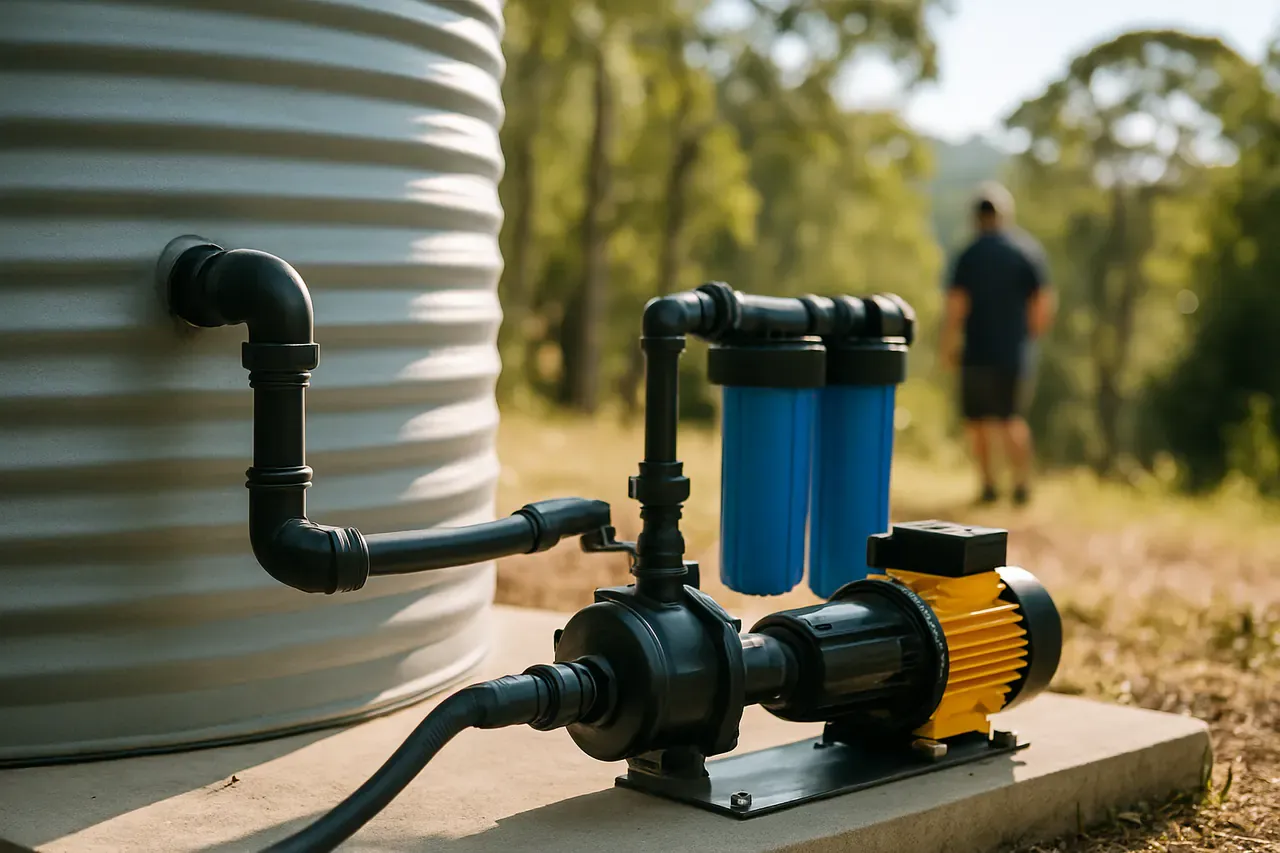
Rainwater tank outlet feeding a pressure pump and two filter housings on a concrete pad, with bush behind

Septic tanks and aerated systems after a week of rain

A septic tank relies on trenches that can soak effluent into the soil, and after a week of rain the creek flats hold water for weeks; the trenches are drowned, the tank fills and the lowest shower or floor waste in the house starts to gurgle and back up. The smell comes first. On an aerated treatment unit the alarm means the blower, the irrigation pump or a float has stopped, often after a storm has cut the power, and the unit stops treating after a day or two without air.

What an emergency plumber can do is clear the house drain to the tank, pump the tank down, and replace a failed pump, blower or float. What nobody can do on the night is dry out a saturated trench, and a system that floods every wet season is a sign it needs an upgrade approved under the City of Gold Coast's on-site sewerage facility rules. Keep showers short and the washing machine off until it recovers, and keep vehicles off the trench area.

Green rainwater tank and a small pressure pump beside a timber house on an acreage block

Cracked pipes across creek flats and hillsides, and roots from the figs

Water and sewer runs on valley blocks are long, often a hundred metres or more from the tank or the shed to the house, laid across creek flats that swell and shrink, clay and rock on the hillsides, and under the drip line of trees. The ground moves and the pipe cracks, usually at a joint. A green patch in a dry paddock, a pump that will not stop, or a soft spot above the drain line are the signs.

The creek-side figs and camphor laurels send roots into every drain in the valley, clay or PVC, and a drain that blocks every few months is almost always roots. Clearing it buys time; a camera inspection shows where they get in, and cutting out or relining that section stops the pattern. Finding a break along a long run is half the job, and an emergency plumber with a listening device or a locator does it with far less digging.

The creek in flood and how to get a plumber in

  • Say what you haveSeptic with trenches or an aerated unit, the tank and pump make if you can read it, LPG or no gas.
  • Say how to get inGate code, driveway length, a creek crossing or causeway, and whether the road is cut or likely to be. The plumber tells you how long the trip will take before anything is agreed.
  • Never drive through floodwaterNot to meet a plumber, not for anything. Follow the City of Gold Coast's floodwater safety advice and call the SES on 132 500 for storm and flood help; 000 if anyone is in danger.

Tallebudgera Creek floods in heavy rain and cuts off parts of the valley, and the afternoon storms that build inland in spring and summer arrive with the gutters already full. Water through the garage on the downhill side of the house, an overflowing gutter or a surface drain that cannot cope are wet-season regulars; a drain that fails every storm is worth fixing before the next one.

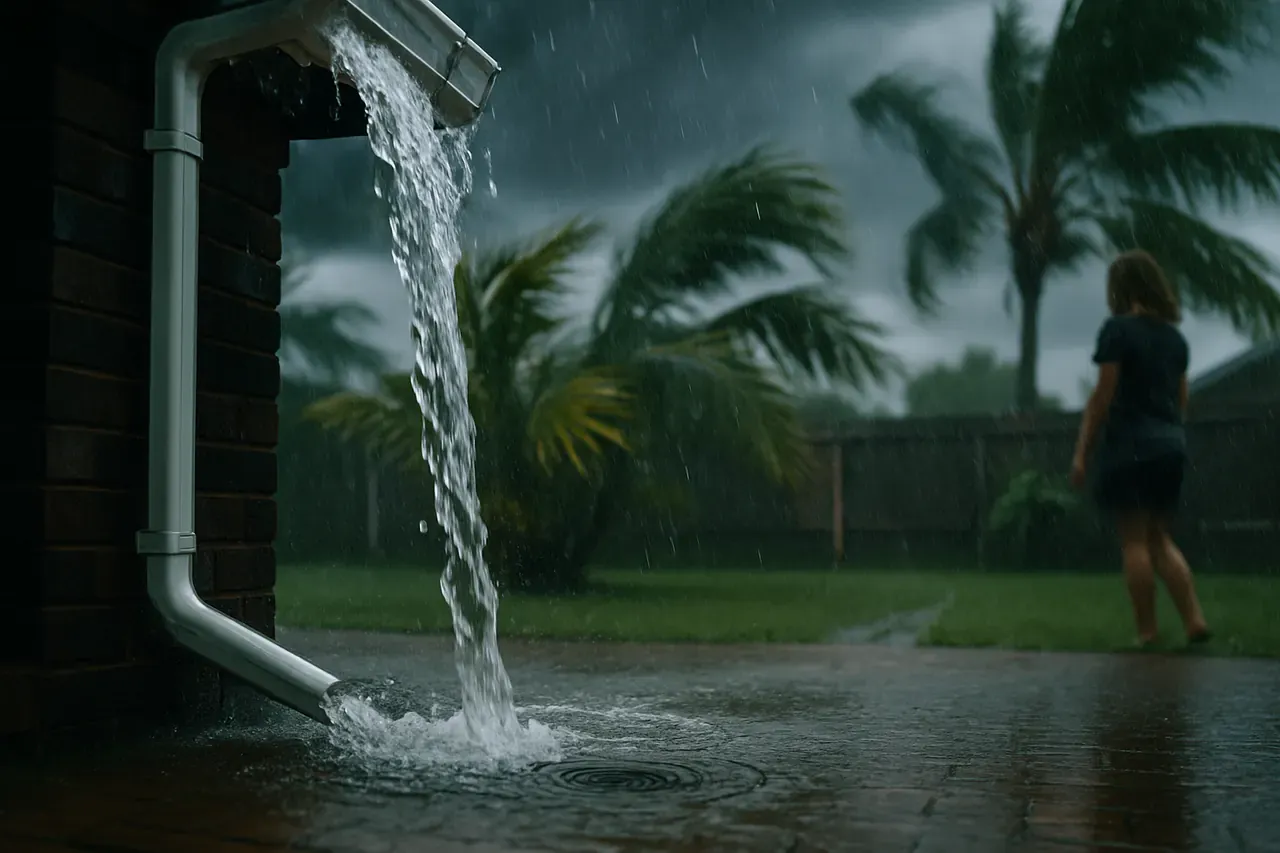
Heavy rain overflowing a gutter and downpipe in a backyard during a storm

What an emergency plumber costs in Tallebudgera

The rate is the same as everywhere else on the Gold Coast: $130-170 an hour for emergency work at any hour, with no separate call-out fee and no weekend or night surcharge; non-urgent after-hours work is $190-320 an hour. The drive up the valley is part of the job and the plumber tells you how long it will take before anything is agreed. Parts such as a pump, a UV lamp or a septic pump-out are quoted before they are fitted.

As a guide: a pressure pump replacement is $650-1,500, a septic pump-out $700-1,600, finding a hidden leak on a long run $350-800, a camera inspection $220-350 and a root cut $400-800.

  • Pressure pump replacement$650-1,500
  • Septic system pump replacement$700-1,600
  • Hidden leak detection and repair$350-800
  • CCTV drain inspection$220-350
  • Tree root cutting$400-800

2026 reference ranges. Full price list and price estimator →

Places we know around Tallebudgera

  • Tallebudgera Creek Road

    Acreage and rural-residential homes strung along the creek, almost all on tanks and septic, with long private pipe runs.

  • The upper valley

    Hobby farms, older farmhouses and larger modern homes on lifestyle blocks, where storm-cut roads and long driveways are part of the job.

  • Schuster Park

    The lower end of the valley where the creek widens toward Palm Beach and backs up in heavy rain.

  • Emergency plumber Mudgeeraba

    Over the ridge to the north-west: the hinterland village with estates on the Robina side and acreage behind.

  • Currumbin Valley

    The next valley south, with the same mix of acreage on tanks, pumps and septic systems.

Official sources: City of Gold Coast: on-site sewerage facilities (approvals and servicing rules for septic and aerated systems) · City of Gold Coast: stormwater and floodwater safety (what to do when Tallebudgera Creek and local drains flood) · QBCC: find a licensed contractor (check a plumber's or gas fitter's licence before work starts) .

First five minutes

Plumbing Emergency in Tallebudgera? What to Do Right Now

Pick what is happening. These are the safe first steps for the next five minutes, before the plumber arrives.

Burst or leaking pipe: what to do now

Stop the water first, then deal with the mess.

  1. Turn the water off at the meter. Houses: the meter sits in a box at the front boundary, in the ground or on a short stand near the footpath. Turn the tap clockwise, or turn the lever a quarter-turn so it sits across the pipe. Apartments: look for the isolation valve in the meter cupboard on your floor, in the laundry, or under the kitchen sink.
  2. Keep water away from electricity. If water is near power points, lights or appliances, switch the power off at the switchboard, but only if you can reach it without standing in water.
  3. Drain what is left in the pipes. Open a cold tap at the lowest point of the home (a garden tap is ideal) and switch the hot water system off at the switchboard or the gas tap.
  4. Limit the damage. Buckets and towels under the leak, furniture and valuables moved, and photos for your insurer before anything is cleaned up. In a tower or walk-up, tell the building manager if water may reach the apartment below.

Don't use electrical appliances in a wet room, and don't turn the water back on to test it.

Smell of gas: what to do now

Get out first. Make every call from outside.

  1. Don't touch anything electrical. No light switches, exhaust fans or appliances, and no flames or cigarettes. A single spark can ignite gas.
  2. Turn the gas off at the meter or the bottle if you can reach it safely. Mains gas: the handle on the meter is off when it sits across the pipe. Bottled LPG: close the valve on top of the cylinder clockwise.
  3. Open doors and windows and get everyone outside. Pets too. Stay out until you are told it is safe.
  4. From outside, call 000 if the smell is strong, or 1800 427 532 for a leak. 1800 427 532 is the 24-hour gas emergency line of Allgas, the gas network for the Gold Coast. They attend free of charge and make the supply safe. If anyone feels unwell or there is a fire, ring 000 first. Call 1800 427 532 (gas leaks, Allgas)
  5. Then book a licensed gas fitter. The network makes the supply safe. Finding and repairing a leak on your side of the meter, and certifying the work so the gas can go back on, is a licensed gas fitter's job.

Don't go back inside to look for the leak, and don't relight pilot lights yourself.

Sewage or drains backing up: what to do now

Every litre you send down the drain comes back up.

  1. Stop running water. No flushing, taps, showers, washing machine or dishwasher until the blockage is cleared.
  2. Keep people and pets away. Sewage is a health hazard. Wear gloves and wash well if you have to touch anything.
  3. Check the overflow relief gully outside. It is the grated drain against an outside wall, usually near the laundry or kitchen. Clear pot plants, leaves and mulch off it so any overflow happens outside and not through your floor wastes.
  4. Ask next door. If the neighbours have the same problem, or sewage is coming up in the street, the blockage may be in the City of Gold Coast sewer main. Council crews attend sewer spills 24 hours a day on 1300 000 928. Call 1300 000 928 (City of Gold Coast faults)

Don't pour chemical drain cleaner into a blocked drain. It rarely clears a sewer blockage, and it is dangerous for whoever opens the pipe next.

No hot water or leaking tank: what to do now

A leaking tank is urgent. A cold shower is usually a repair, not a disaster.

  1. Leaking tank? Turn off its water supply. Close the tap on the cold-water pipe going into the unit.
  2. Turn off its power or gas. Electric: switch off the hot water circuit at the switchboard. Gas: close the gas tap on the pipe to the unit.
  3. No leak, just cold? Electric: check whether the hot water breaker has tripped. Gas: check that your other gas appliances work and whether the pilot light is out; relight it only by following the instructions printed on the unit. Tank-water property: check that the pressure pump is running and the tank is not empty.
  4. Read the label. Note the brand, model and size printed on the tank. It lets the plumber quote a repair or a replacement before arriving.

Don't block or cap the relief valve that drips from the side of the tank. It is a safety device.

Overflowing or blocked toilet: what to do now

Stop the water going in before you do anything else.

  1. Turn off the tap behind the toilet. It is the small tap on the wall or floor beside the cistern. Turn it clockwise.
  2. Don't flush again. If the bowl is still filling, lift the cistern lid and push the outlet valve down, or lift the float.
  3. Mop up straight away. In an apartment or holiday let, tell the building manager if water may reach the apartment below.
  4. Check the other drains. If the shower or floor waste gurgles or backs up as well, the blockage is in the sewer line: follow the sewage steps.

Don't keep plunging once water reaches the rim, and don't use chemical cleaners.

General guidance only. If anyone is in danger, ring 000.

Questions From Tallebudgera Residents

How fast can an emergency plumber get to Tallebudgera?

It depends on the time of day and where the nearest available plumber is working. Tallebudgera is in the Gold Coast Hinterland; a licensed local plumber replies as soon as one is available and tells you how long the trip will take before anything is agreed. If water is running, turn off the mains first: the guide on this page shows where the meter usually is.

What plumbing problems are most common in Tallebudgera?

Rainwater tanks, pressure pumps and UV filters failing and leaving the house without water; Septic tanks, aerated wastewater systems and absorption trenches flooding after heavy rain; Long private pipe runs across creek flats and hillsides cracking with ground movement. Tallebudgera is a green valley running inland from Palm Beach along the creek, with acreage homes, hobby farms and lifestyle blocks, most of them off town water and sewer. It is a beautiful place to live and a demanding one to plumb.

Do you charge more for after-hours calls in Tallebudgera?

Not for a genuine emergency: the rate is $130-170 an hour at any hour in Tallebudgera, travel included, with no separate call-out fee. Non-urgent work you choose to have done after hours is $190-320 an hour. The plumber confirms which applies in writing, and the repair itself is quoted before work starts, so there are no surprises on the invoice.

Are the plumbers who attend Tallebudgera licensed?

Plumbing and drainage work in Queensland must be carried out by QBCC-licensed plumbers, and gas work by licensed gas fitters. You are entitled to ask for the licence number before work starts and to check it on the QBCC website.

How much does an emergency plumber cost in Tallebudgera?

$130-170 an hour at any hour with no separate call-out fee, and $190-320 an hour for non-urgent after-hours work. The drive is included in the time and the plumber tells you how long it will take before anything is agreed. A pressure pump is typically $650-1,500 and a septic pump-out $700-1,600.

My tank water has stopped, what do I check?

Check the power and breaker at the pump, the water level in the tank, and the line from tank to house for hissing or wet ground. If the pump is running constantly, switch it off so it does not burn out. Then send the form with what you found; a licensed local plumber replies as soon as one is available.

Why does my septic flood after rain?

Septic effluent soaks into trenches, and after days of rain the valley soil is saturated and cannot take any more, so the tank fills and backs up into the house. A plumber can pump it down and fix the mechanical parts, but the trench only recovers when the ground dries. Trenches that flood every wet season may need an upgrade approved by the City of Gold Coast.

My aerated treatment system alarm is going off. Is that an emergency?

Yes, treat it as urgent. The alarm usually means the blower, irrigation pump or a float has stopped, often after a power cut, and the unit stops treating after a day or two. Reduce water use, do not just silence the panel, and send the form with the make of the unit. An emergency plumber replaces the failed part; scheduled servicing is done by a service agent.

The pump runs but the pressure keeps dropping. What is wrong?

A pump that cannot hold pressure is losing water somewhere: a split in the line to the house, a leaking toilet cistern, a dripping relief valve on the hot water unit, or a failed pressure tank bladder. Turn off every tap and the hot water isolation valve and watch whether the pump still cycles. A hidden leak on a long run is $350-800.

The creek has cut the road. Can a plumber still come?

Say in the first message that the road is cut or likely to be, and the plumber will tell you honestly whether and when they can reach you and from which direction. Never drive through floodwater to meet anyone. The City of Gold Coast's floodwater safety advice and the SES on 132 500 come first, and 000 if anyone is in danger.

Can an emergency plumber service my aerated treatment unit as well as fix it?

An emergency plumber can repair or replace a failed blower, pump, float or alarm on the night. The regular servicing the City of Gold Coast requires for aerated systems is done under a service agreement by an approved service agent, and the plumber can tell you whether the fault they found is something your agent should look at next.

I smell gas near my LPG cylinders. What do I do?

Turn off the cylinder valves, open doors and windows and keep switches, phones and flames away from the smell. If the smell is strong or anyone feels unwell, leave the house and call 000. Repairs to regulators, pigtails and gas pipework need a QBCC-licensed gas fitter. On the Allgas network, leaks are reported on 1800 427 532, 24 hours.

How do I check a plumber is licensed in Queensland?

All plumbing, drainage and gas work in Queensland must be done by a QBCC-licensed plumber or gas fitter. Ask for the licence number and check it on the QBCC's find-a-contractor search before work starts. The licensed local plumbers we work with can send the number in the first message.

24/7 availability
Day, night, weekends and public holidays across the Gold Coast
Call now Get a quote