
Emergency Plumber GC · · 6 min read
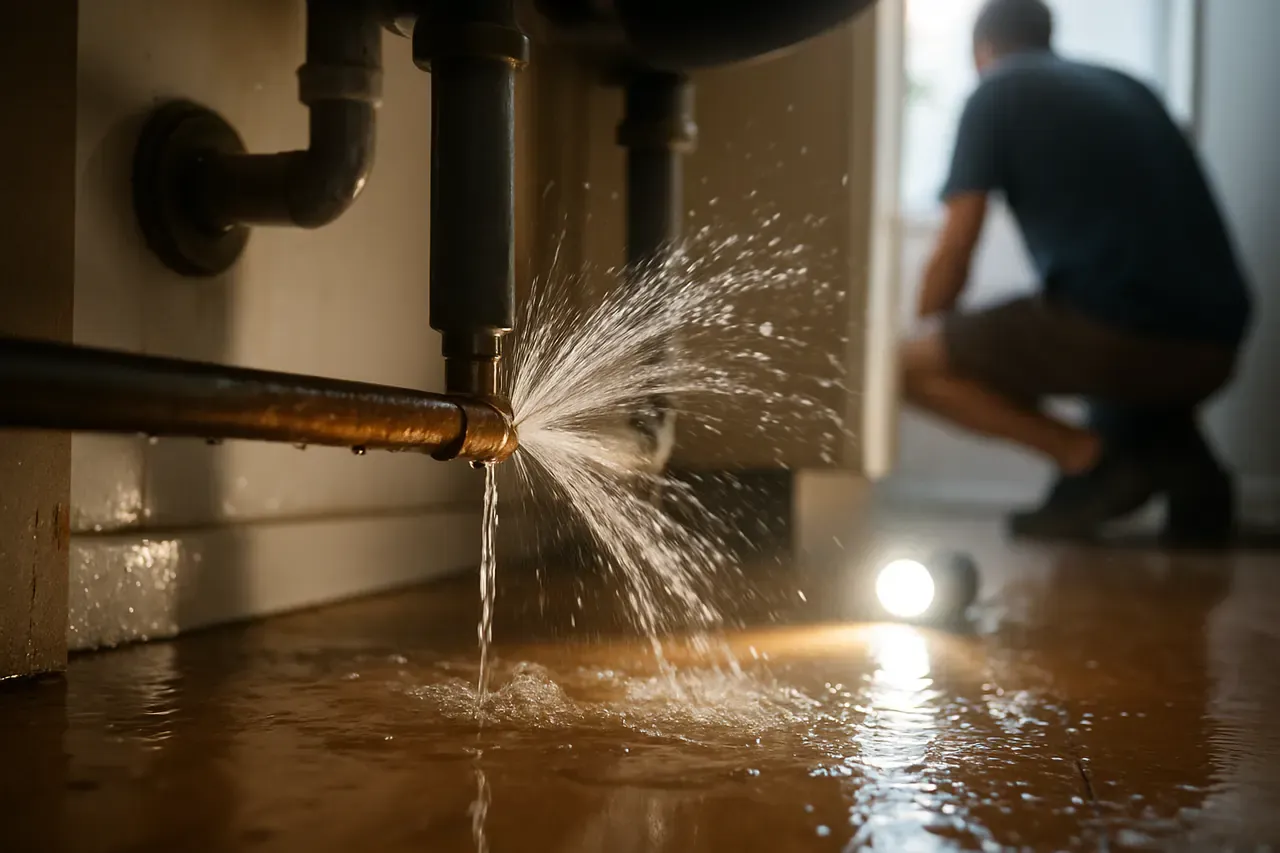
A pipe under mains pressure can put a bathtub of water through a home every few minutes. On the Gold Coast, where most houses sit on concrete slabs and most apartments sit on top of other apartments, that water has nowhere to go except into your floor or your neighbour’s ceiling. The plumber is on the way; what happens in the fifteen minutes before they arrive decides how much of the house is affected. Here is the order to do things in.
1. Stop the water
In a house, go to the water meter. It is near the front boundary, in the ground under a small lid or on a stand, with a tap or a lever. Turn it off. Then go inside and open a tap, which drains the pressure from the pipes and stops the flow at the burst within a minute. If the burst is at a single fixture, such as a flexi hose under a sink, a vanity or a toilet cistern, the small isolation tap under that fixture stops it on its own, and you can leave the rest of the house on.
In an apartment, the unit has its own isolation valve: look in the laundry cupboard, under the kitchen sink, behind an access panel in the bathroom or in a meter room on the floor. If you cannot find it within a minute, call the building manager, who can isolate the riser. Again, a burst flexi hose is stopped at the small tap under the fixture.
The best time to find your meter and your isolation valves is a quiet afternoon, not now. If you are reading this without a burst pipe, go and look.
2. Make the power safe
If water is coming through a light fitting, running down a wall with power points or pooling near an appliance, turn the power off at the switchboard before you touch anything. Water and electricity in the same room is the one way a burst pipe becomes dangerous rather than expensive. If the water is nowhere near electricity, leave the power on: you will want light, and you will want fans running as soon as the water is off.
3. Protect what you can
Move furniture, rugs, electronics and anything on the floor out of the wet area or up onto blocks. Lift the edges of carpet if you can. Put a bucket under a dripping ceiling and, if the ceiling is bulging with water, do not stand under it; a small hole from a screwdriver at the lowest point lets it drain into the bucket instead of coming down all at once. Towels at doorways slow the spread to other rooms.
4. If you are in an apartment, think about the floor below
Water travels down. If it has been running for more than a few minutes, the apartment below almost certainly has it. Knock on their door, or call the building manager, so they can move their things and the leak can be documented from both sides. Body corporate insurers need to know which lot the water started in and whether the failed part was in the lot or in common property; the plumber’s report and photographs from both apartments settle that.
5. Call the plumber with the right information
Say where you are, whether the water is off, where it is coming from, whether it is clean water or sewage, whether it is reaching a neighbour, and how to get in. The ACCC sets out your rights on quotes and after-hours charges. That lets the plumber confirm the rate in writing, bring the right parts, and in an apartment, coordinate the lift and the building manager before arriving instead of after. The 24 hour plumber page explains what happens on arrival: isolate, diagnose, quote, fix.
6. Photograph everything, keep the part
Before anyone starts cleaning up, photograph the water, the damage, the source and the failed fitting. When the plumber replaces the part, keep it. Most Queensland home and contents policies cover the sudden water damage a burst pipe causes, but they will want to see the cause, and the plumber’s written report describing the cause, the location and the repair is what the claim is built on. The worn pipe or hose itself is usually not covered; the ruined carpet and the ceiling are.
7. Start drying now
Once the water is off, open windows, run fans and, if you have one, a dehumidifier. Lift wet carpet and underlay. The first twenty-four hours decide whether the room dries out or grows mould behind the skirting for the next year, and an insurer will expect you to have started. Damp and mould also carry health effects, especially for asthma and allergy sufferers. If the damage is extensive, ask the insurer about a restoration company; many policies include it.
Why this happened
On the Gold Coast the burst is most often a flexible braided hose corroded by salt air, a copper line from the 1970s to 90s that has pinholed under the slab or at a fitting, a galvanised steel line in a pre-1980 home rusting through, or a fitting at a pressure pump on a canal lot. The burst pipe repair page explains each, and the single best prevention is boring: replace flexible hoses every five to ten years, and have older pipework looked at before it fails.
Questions on this topic
Where is the water meter on a Gold Coast house?
Almost always near the front boundary, in the ground under a small lid or on a stand near the fence, on the side closest to the street water main. It has a tap or a lever. Turn it clockwise or to the closed position and the whole property is off. Find it on a quiet afternoon, not at 2am.
How do I turn the water off in an apartment?
Each unit usually has an isolation valve, often in the laundry cupboard, under the kitchen sink, behind an access panel or in a meter room on the floor. If you cannot find it, call the building manager, who can isolate the riser. Many apartment floods come from a flexi hose; turning off the small tap under the sink or vanity stops that one on its own.
Should I turn the electricity off?
If water is dripping from a light fitting, running down a wall with power points, or pooling near an appliance, yes: switch off at the switchboard before touching anything. If the water is nowhere near electricity, leave the power on so you have light and can run fans afterwards.
What should I tell the plumber in the request?
Where you are, whether the water is off, where the water is coming from, whether it is clean or sewage, whether it is reaching the floor below, and how to get in. That lets the plumber plan the trip, bring the right parts and, in an apartment, coordinate with the building manager before arriving.
Will insurance cover the damage?
Most Queensland home and contents policies cover sudden, accidental water damage from a burst pipe or flexi hose, but not the worn part itself or a slow leak that was ignored. Photograph everything before cleaning up, keep the failed part, and ask the plumber for a written report stating the cause, the location and the repair.
- burst pipe
- water meter
- flexi hose
- apartments
- insurance
- what to do
Related articles
Costs & Pricing
How Much Does an Emergency Plumber Cost on the Gold Coast?
Nobody can honestly quote an emergency plumbing job before seeing it, but every honest plumber can tell you what changes the price. Here is what to expect on the Gold Coast and how to avoid a surprise on the invoice.
Read More
Council & Compliance
Gold Coast Council Plumbing Inspections: When You Need One and Why
Searches for Gold Coast council plumbing inspections come from homeowners told they need one and unsure why. Here is how council approval works, which work needs it and who handles the paperwork.
Read More