Renovation Rough-In, Fit-Off and the Leaks Hiding Behind the Tiles
Bathroom renovations are the biggest plumbing jobs most Gold Coast homeowners ever commission, and the ones where getting the sequence wrong costs the most. The plumber is involved at the start, to scope what can move and what cannot; in the middle, to rough in water and drainage before the walls close; and at the end, to fit off fixtures after the waterproofer and the tiler have finished. Skip any of those steps or do them in the wrong order and the result is a beautiful bathroom that leaks into the room next door.
Scoping: what the floor decides
The first question in any Gold Coast bathroom is what the floor is. Homes on timber floors with subfloor access, common in older cottages in Miami, Palm Beach and Tugun and in Queenslander-style homes in the hinterland, allow fixtures to be moved with relatively simple drainage work. Homes on concrete slabs, which is most houses built since the 1970s and every apartment, do not. Moving a toilet or a shower on a slab means cutting the concrete to run new drainage, and that single item is usually the largest cost in the job. The plumber will tell you honestly whether the layout you want justifies the slab work, and will often suggest a layout that keeps the toilet where the drain already is and moves everything else.
Rough-in and permits
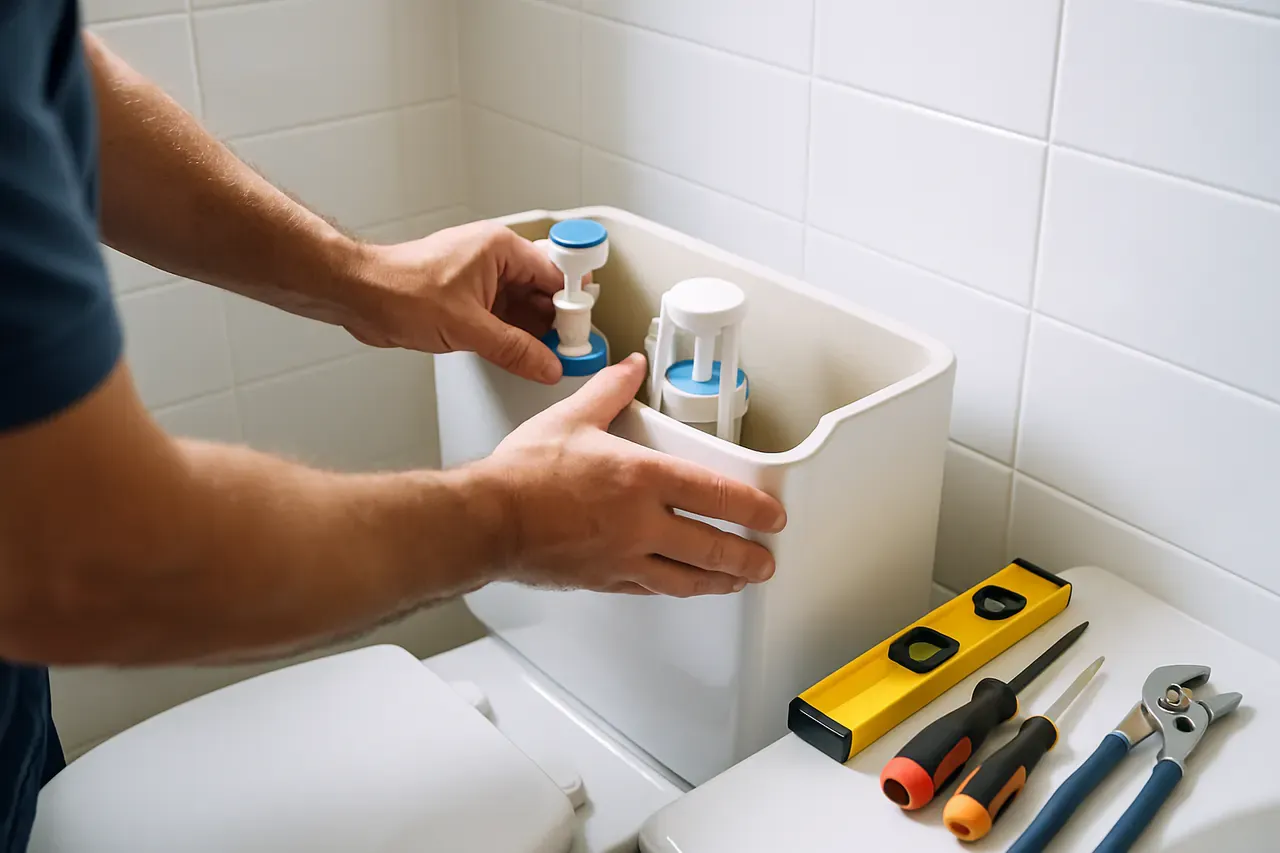
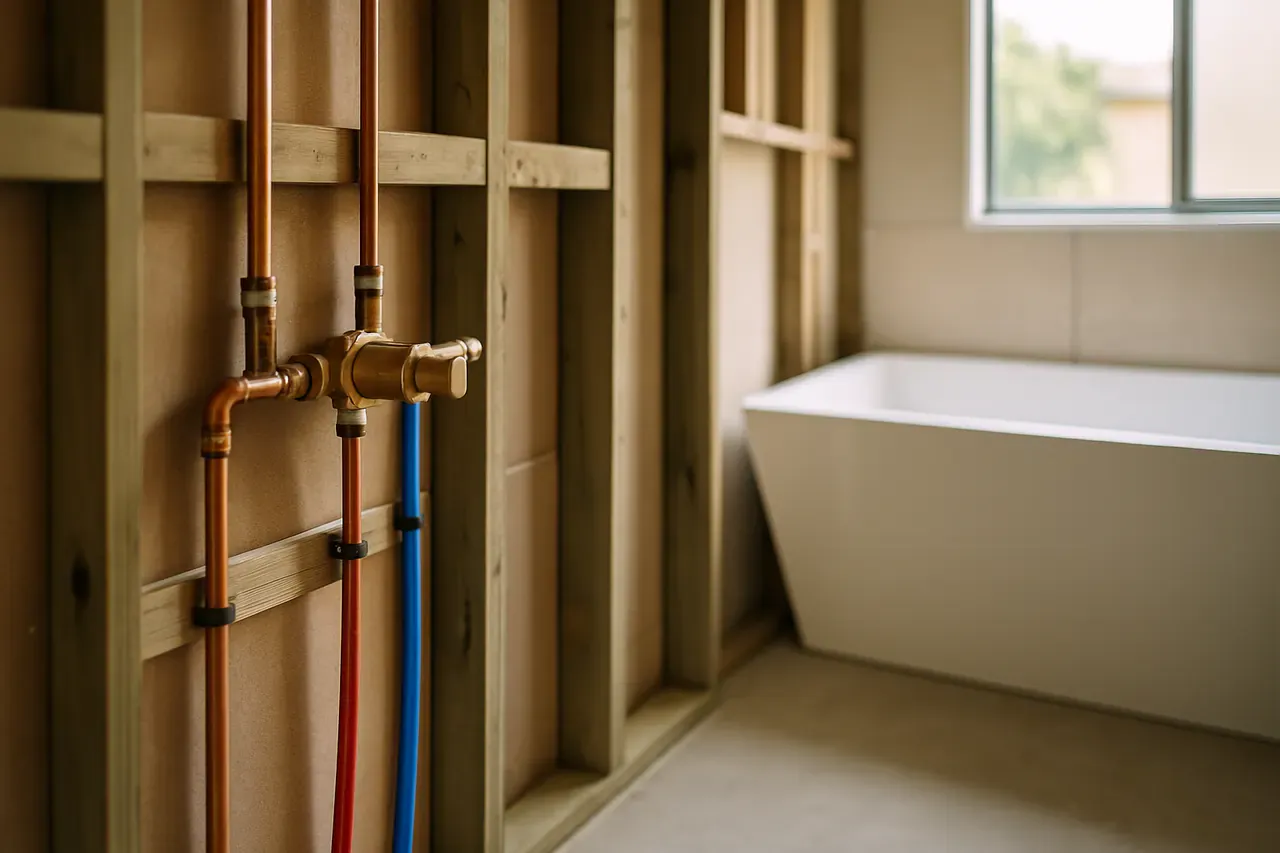
Once the layout is agreed, the plumber runs the water and drainage to the new positions while the walls and floor are open. This is where old pipework gets replaced: galvanised and early copper in 1960s to 80s homes in Southport, Labrador, Benowa and Mermaid Beach should go while the wall is open, because a new bathroom plumbed onto old pipes is the most common reason a renovation leaks within five years. In-wall cistern frames for wall-hung and back-to-wall toilets, popular in renovations across Burleigh, Mermaid Beach and Robina, are installed at this stage. New drainage and relocated fixtures need a permit from the City of Gold Coast and an inspection before the work is covered; the plumber lodges and coordinates that.
Waterproofing and sequencing
After rough-in, the licensed waterproofer applies the membrane, then the tiler tiles, then the plumber returns. Licences for each trade can be checked on the QBCC register. Getting that sequence right and getting the drain flanges, the shower hob or channel and the niche positions agreed between the three trades before anyone starts is most of what separates a good renovation from a leaking one. The plumber can coordinate directly with the builder, tiler and waterproofer, or work under a builder’s schedule.
Fit-off and certification
Fit-off is the visible part: vanities, showers, baths, toilets, tapware and mixers installed, connected and tested under pressure. The plumber checks every joint, runs every fixture and inspects the floor waste and the shower drain. On completion you receive the compliance certificate for the plumbing work, which matters when you sell and if a leak claim ever arises in an apartment.
Bathroom repairs without a renovation
Not every bathroom call is a renovation. Showers leaking into the next room are usually the waterproof membrane, the grout or the drain flange rather than the pipes, and the plumber tests both before opening a wall. Weeping mixers and shower roses, cracked vanity traps, failed flexi hoses and toilets at the base are all repaired on the day; see toilet repairs for the toilet-specific faults. If the hot water to the bathroom has become unreliable, the hot water plumber page explains what fails and why.
Apartments and body corporates
Renovating a bathroom in a Surfers Paradise or Coolangatta apartment adds the body corporate: approval is normally needed for work in a lot that touches plumbing, waterproofing or common property risers, and the plumber’s scope and certification support that application. Wall-hung toilets on P-trap set-outs, in-wall frames and the shared riser connections are routine in apartment renovations, and the building manager is part of the planning.
What's included
- Rough-in of water and drainage for new bathroom layouts, including relocated fixtures
- Fit-off of vanities, showers, baths, toilets, tapware and mixers
- In-wall cistern frames for wall-hung and back-to-wall toilets
- Shower leak diagnosis: waterproofing failures, drain flanges and mixer bodies
- Replacement of old galvanised and copper pipework uncovered during the renovation
- Coordination with the builder, tiler and waterproofer on sequencing
- Council permit and inspection where the work requires it
- Compliance certificates on completion
Signs you should act now
- You are planning a bathroom renovation and want the plumbing scoped before the tiler is booked
- A shower is leaking into the room next door or the ceiling below
- Tapware, a mixer or a shower rose is weeping and cannot be fixed with a washer
- You want to move the toilet, the shower or the vanity to a new wall
- The bathroom is original to a 1960s to 80s home and the pipework has never been replaced
- A body corporate needs a bathroom in a unit re-plumbed to stop leaks into common property
What it costs
Work on this page is charged by the hour: $130-170 an hour for a genuine emergency at any hour of the day or night, travel included, with no separate call-out fee, and $190-320 an hour for non-urgent work you choose to have done after hours, on a weekend or on a public holiday. Parts are shown separately on the quote, and the plumber confirms the price in writing before work starts.
Frequently asked questions
Do I need a licensed plumber for a bathroom renovation in Queensland?
Yes. All plumbing and drainage work in Queensland must be done by a QBCC-licensed plumber, and some renovation work, particularly new drainage and relocated fixtures, needs a permit from the City of Gold Coast and an inspection. Waterproofing must be done by a licensed waterproofer. The plumber lodges the plumbing permit as part of the job.
How much does it cost to move a toilet or a shower?
It depends on what the floor is. On a timber floor with subfloor access, moving fixtures is straightforward. On a slab, which most Gold Coast homes have, moving a toilet or a shower means cutting the slab to run new drainage, which is the biggest single cost in a renovation. The plumber will tell you at the scoping visit whether the layout you want is worth the slab work, and price it before you commit.
My shower is leaking into the next room. Is it the plumbing or the waterproofing?
Usually the waterproofing or the grout, not the pipes. A leak that appears only when the shower is used, and not when the tap is simply on, points to the waterproof membrane, the floor drain flange or the screen. A leak that continues with the shower off points to the mixer body or the pipework in the wall. The plumber tests both before anyone opens a wall.
Can you install a wall-hung toilet in an apartment?
Yes, where the wall can take the in-wall cistern frame and the drain set-out allows a P-trap connection, which is common in apartments. The frame is installed at rough-in and the pan hung after tiling. Body corporate approval is normally needed for renovation work in a lot, and the plumber's paperwork supports that.
Should I replace the old pipework while the walls are open?
In a 1960s to 80s home in Southport, Miami, Palm Beach or Benowa, almost always yes. Once the wall is open, replacing galvanised or old copper to the bathroom is a fraction of what it costs later, and a new bathroom plumbed onto old pipework is the most common reason a renovated bathroom leaks within five years.