Stop the Water First, Then Fix the Pipe Properly
A burst pipe is the plumbing emergency that costs the most for every minute it is ignored. Water under mains pressure can put hundreds of litres through a house in the time it takes to find the meter, and on the Gold Coast, where most homes sit on slabs and most apartments sit on top of other apartments, that water goes straight into the floor below or the neighbour below. This page explains what bursts here, how the repair works and what to do in the first five minutes.
What bursts on the Gold Coast
The Gold Coast has three generations of pipework, and each fails in its own way.
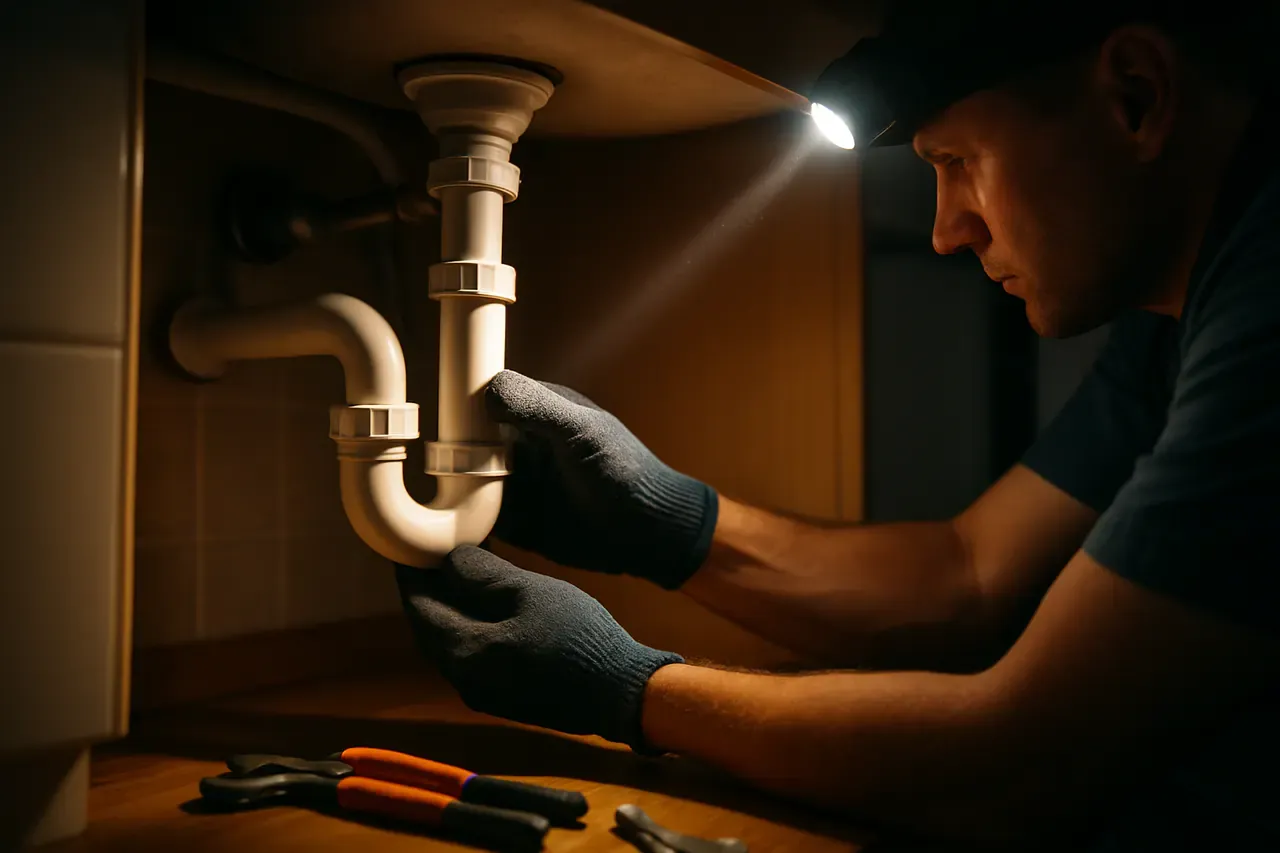
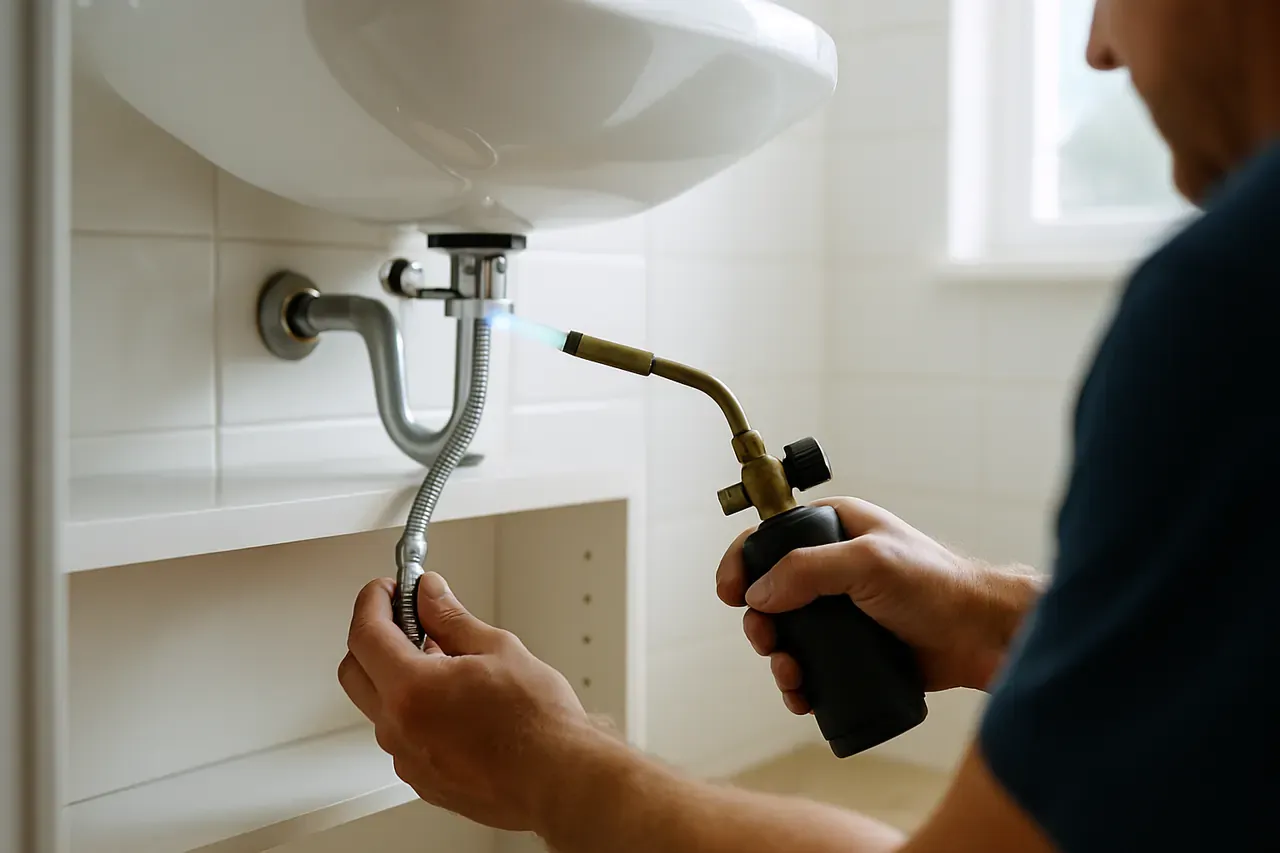
Flexible braided hoses connect taps, toilets and mixers in almost every apartment and every home renovated since the 1990s. The stainless braid corrodes in the salt air, the rubber inner liner splits, and the hose lets go with no warning, usually at night when nobody is watching. They are the single most common cause of flooded apartments in Surfers Paradise, Broadbeach, Main Beach and Coolangatta, and a burst on the eighth floor becomes a ceiling collapse on the seventh.
Copper pipework from the 1970s to the 1990s runs under the slabs and inside the walls of brick homes in Benowa, Helensvale, Robina, Burleigh Waters and most of the established suburbs. It pinholes from the inside, often at a fitting, and the first sign is a warm patch on the floor, a meter that keeps turning, or a water bill that has doubled.
Galvanised steel water lines are still in service in pre-1980 homes in Southport, Labrador, Miami, Palm Beach and Tugun. They rust from the inside until the pressure drops to a trickle or the pipe fails outright. A burst galvanised line is not repaired; that section is replaced, and the plumber will tell you honestly how much of the rest is on borrowed time.
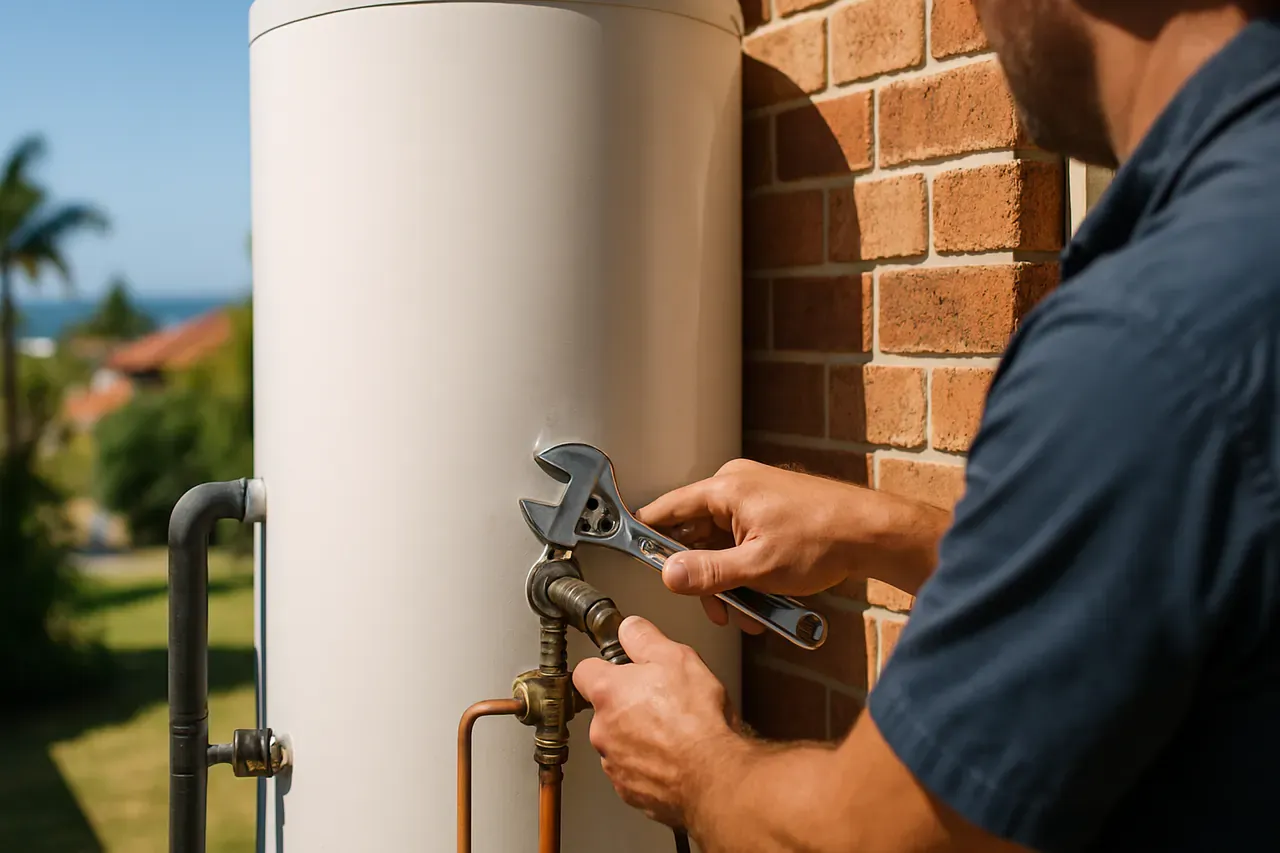
On canal lots and waterfront homes, the failure is often not the pipe at all but the pressure pump, the backflow device or a fitting at the meter, stressed by settling sand and salt.
Isolate the water before anything else
The single most useful thing you can do is find the water meter before you ever need it. On a house it is near the front boundary, in the ground or on a stand, with a tap or lever. The City of Gold Coast is responsible for the meter and the water main that feeds it. Turn it off, then open a tap inside to drain the pressure and stop the flow. In an apartment the unit has its own isolation valve, usually in a cupboard, a laundry or a meter room on the floor; the building manager knows where. If you cannot find either, the shut-off guide on this page shows the usual spots for houses, units and canal homes.
Finding a burst you cannot see
Most bursts are obvious. The ones that are not are under the slab or inside a wall, and those are found rather than guessed at. The plumber first confirms the leak with a pressure test on the isolated line, then narrows the location with acoustic listening equipment, which hears the water escaping, and thermal imaging, which shows the warm or cool patch where it is pooling. That means opening one section of slab or wall instead of three, or, very often on the Gold Coast, not opening the slab at all: rerouting the failed section through the roof space or along an external wall is frequently cheaper and better than cutting concrete.
The repair
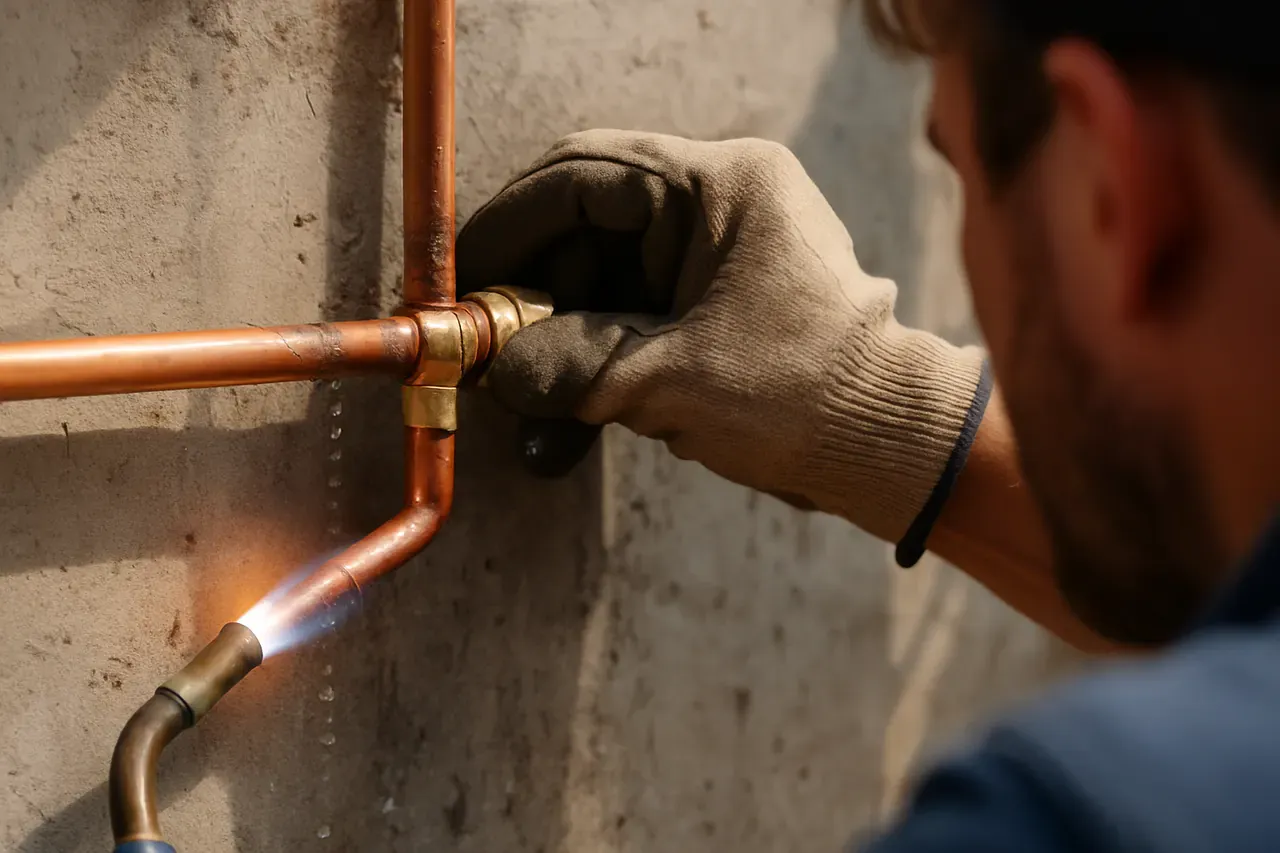
Copper is cut back to sound pipe and joined with new fittings, or rerouted if the run is failing in more than one place. Galvanised is replaced with copper or PEX. Flexible hoses are replaced with rated hoses, and the plumber will usually recommend replacing the others in the home at the same time, because they were installed together and will fail together. Every repair is pressure tested before the water goes back on. If the burst was at a pressure limiting valve or a pump on a canal lot, that component is replaced and the rest of the system checked.
Insurance and paperwork
Sudden water damage from a burst pipe is covered by most home and contents policies in Queensland; the tired pipe itself usually is not. Insurers ask for a plumber’s report stating the cause, the location and the repair, and that report is part of the job. Photograph the damage before anything is cleaned up, keep the failed part, and start drying the area as soon as the water is off: fans, open windows and lifting wet carpet in the first day make a large difference to the claim and to whether the room smells for months. Damp left too long brings mould and the health problems that come with it.
Prevention that actually works
Replace flexible hoses every five to ten years, or as soon as the braid shows rust. Know where your meter is. Have a pre-1980 home’s galvanised lines assessed before they fail. On a canal lot, have the pump and backflow device checked before storm season. A plumbing maintenance inspection covers all of it in one visit and is a fraction of the cost of a 2am flood.
What's included
- Phone guidance to isolate the water at the meter or the unit valve
- Location of the burst, including under-slab and in-wall leaks with acoustic or thermal detection where needed
- Repair or replacement of the failed section, fitting or hose
- Pressure test of the repaired line before the water goes back on
- Check of the pressure limiting valve and other fittings likely to fail next
- Advice on drying out and a written report for your insurer
Signs you should act now
- Water running from a wall, ceiling or under a kitchen or bathroom cabinet
- A warm or damp patch on a concrete slab floor
- Water meter turning when every tap in the house is off
- Sudden drop in water pressure or a hissing sound in the walls
- A water bill that has doubled without a change in use
- Rust-coloured water or a bulging, corroded flexible hose
Find your water meter now, not at 2am
Every Gold Coast house has a meter near the front boundary with a tap or lever that shuts off the whole property. Apartments have an isolation valve in a cupboard or meter room. Knowing where yours is turns a flooded house into a wet floor.
What it costs
2026 Gold Coast reference ranges, labour included. The plumber confirms the price in writing before work starts.
| Flexi-hose replacement (kitchen or bathroom, both sides) | $180-280 |
| Visible burst pipe repair (exposed copper, PEX or poly) | $200-450 |
| Hidden leak detection + repair (in-wall, ceiling, under a unit floor) | $350-800 |
| Slab leak detection + repair (concrete-slab homes) | $1,500-4,500 |
Where to turn the water off
Lever handle Turn it a quarter-turn. Across the pipe means off.
Round wheel Turn clockwise until it stops, usually 8 to 10 full turns.
Which tap? The stop tap on the house side of the meter. The meter and the street side belong to the City of Gold Coast.
Whose pipe is it: yours or the City of Gold Coast's?
Water main. The City of Gold Coast's. A leak in the street or on the footpath is theirs to fix: report it on 1300 000 928, 24 hours.
Main-to-meter pipe and the meter. The City's. It repairs the water supply system up to and including your water meter.
Pipes from the meter to the house. Yours. Every pipe and fitting on the property owner's side of the meter is the owner's to maintain and repair, including the pressure pump on a canal or tank-water home. In a tower or unit block, the pipes after the main meter belong to the body corporate.
House drain and overflow relief gully. Yours, from the house to the point where your drain joins the council sewer, usually at or near your boundary. The overflow relief gully (the grated drain outside the laundry or kitchen wall) must be kept clear and working; it is the one safety valve your sewer has.
Council sewer main. The City's. Its maintenance crews repair the sewerage network around the clock, and a spill or blockage in the main is theirs to clear.
A sewer blockage is probably the City's if
- the overflow relief gully keeps overflowing while nobody is using water
- your neighbours have the same problem, or sewage is coming up in the street
- a council manhole nearby is overflowing
It is probably in your pipes if
- it only overflows when taps, toilets or showers are being used
- one toilet, sink or shower drains slowly and the neighbours are fine
- your home is on a canal lot or old clay drains and it has blocked before
Frequently asked questions
What is the most common cause of a burst pipe on the Gold Coast?
In apartments and newer homes it is the flexible braided hose under a vanity, sink or toilet cistern; they corrode in the salt air and let go without warning. In homes built before 1980 it is galvanised steel water lines rusting through, and in 1970s to 90s brick homes it is copper pinholing under the slab or at a fitting behind a wall.
How do I find a burst pipe under a concrete slab?
The usual signs are a warm patch on the floor, a meter that keeps turning with every tap off, and a drop in pressure. The plumber confirms the leak with a pressure test and locates it with acoustic listening equipment or thermal imaging, so only the right section of slab is opened, or the pipe is rerouted above ground to avoid opening the slab at all.
Should I turn off the water before the plumber arrives?
Yes, unless the leak is a tiny drip. Turn off the meter at the front boundary, then open a tap inside to release the pressure. In an apartment, use the unit isolation valve or ask the building manager. The plumber will still be able to diagnose the burst with the water off.
Does home insurance cover a burst pipe?
Most Queensland home and contents policies cover sudden, accidental water damage caused by a burst pipe or flexi hose, but generally not the worn pipe itself or damage from a slow leak that was ignored. The plumber's written report describing the cause, the location and the repair is what insurers usually ask for. Keep the failed part and photograph the damage.
Can you repair a burst pipe at night?
Yes. Most bursts can be repaired on the spot at any hour. Where the burst is under a slab or in a wall and needs excavation or parts, the plumber will isolate that section, restore water to the rest of the house where possible and return in daylight for the permanent repair, with the price agreed first.
Why do canal homes get so many burst mains?
Canal estates like Bundall, Runaway Bay, Hope Island and Burleigh Waters were built on dredged sand that keeps settling, which strains the mains and service lines, and many still run pressure pumps and backflow devices that fail. Salt air adds corrosion. A burst on a canal lot is often a fitting at the pump or the meter rather than the pipe itself.