No Hot Water, a Leaking Tank or a Unit Rusted Through by Salt Air
Hot water is the one plumbing failure that everyone in the house notices straight away. On the Gold Coast it also fails earlier than almost anywhere else in Australia, because most units live outside in salt air. This page covers what goes wrong with the four types of system in use across the coast, what can be repaired and what cannot, and how the north and the south of the city differ.
Four systems, four failure modes
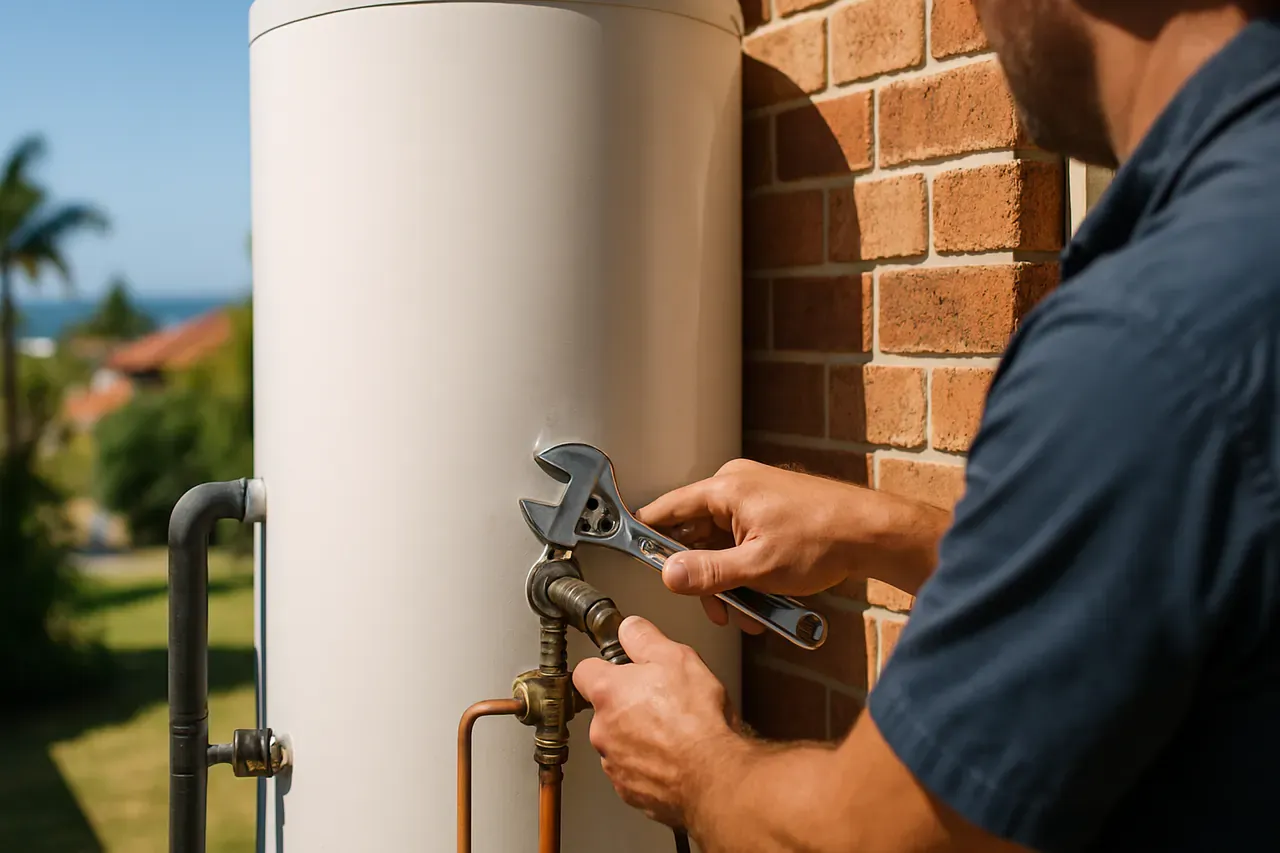
Electric storage tanks are the most common unit on the coast, from the 1970s brick homes of Benowa to the apartments of Surfers Paradise. They fail two ways: the element or thermostat gives out, which is a repair, or the tank rusts through and leaks from the seam or the base, which is a replacement. Salt air makes the second happen sooner.
Gas storage units have the same tank problem plus pilot lights, thermocouples and gas valves that fail. A pilot that will not stay lit is usually a thermocouple; a tank leaking from the seam is the end of the unit.
Continuous-flow (instantaneous) gas units, common in homes built since the 2000s in Robina, Varsity Lakes, Helensvale and the northern estates, have no tank to rust. They fail at the igniter, the flow sensor, the heat exchanger or the control board, and most faults are repairable if parts are available for the model. Scale from the water supply and salt on the external casing are the usual killers.
Heat pumps are increasingly common as replacements. They are electric storage units with a compressor, and the tank, the element and the compressor can each fail. They need airflow and are not suited to every enclosed spot.
Repair or replace: the honest answer
A failed element, thermostat, tempering valve, relief valve, igniter or thermocouple is a repair and is done on the spot in most cases. A tank leaking from the cylinder or the seams cannot be repaired by anyone; it is replaced. Between those two is the grey area: an old unit with a repairable fault. The plumber will give you the price of the repair and the price of a replacement and say which they would do in your position. On a twelve-year-old storage unit in Palm Beach, that answer is usually replace; on a six-year-old continuous-flow unit in Coomera with a failed igniter, it is repair.
Hot water north and south of the coast
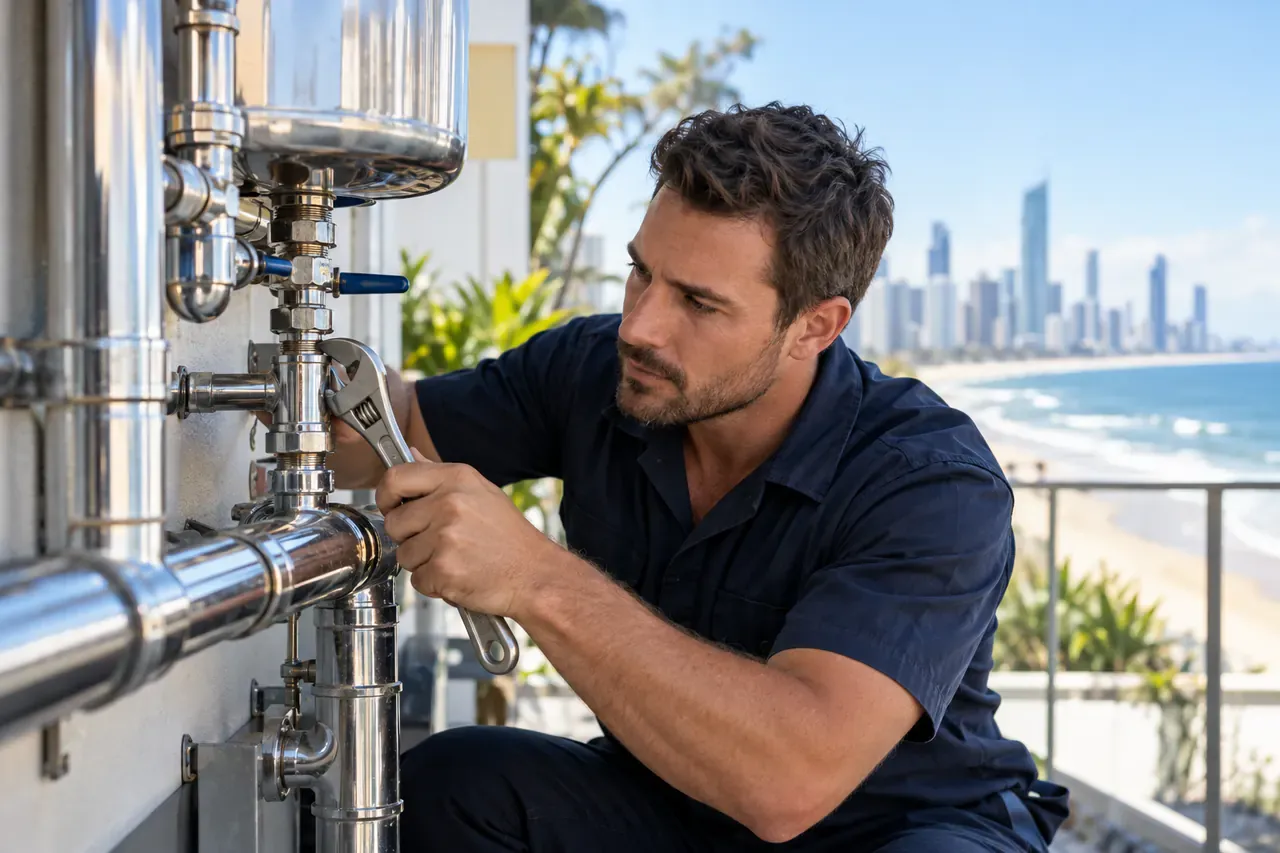
The searches “hot water plumber gold coast north” and “hot water plumber gold coast south” exist because the two halves of the city have different units. The north, from Helensvale through Coomera to Pimpama, was built mostly since the 1990s, so the failures are mains-pressure storage units and continuous-flow units reaching their first replacement, plus tank-water properties in Oxenford and Ormeau where the hot water unit shares a pressure pump. The south, from Broadbeach to Coolangatta, has more pre-1990 housing, more units on external walls facing the beach and more walk-up unit blocks with shared or undersized systems; salt corrosion is the dominant failure. The hinterland behind both is the gentlest environment for a hot water unit and the hardest to reach quickly, so units there tend to be older and to fail on tank pressure pumps as much as on the unit itself.
Installation done to code
A replacement is not just swapping boxes. Installations must meet the Plumbing Code of Australia and the relevant state plumbing rules. The tempering valve that limits water to bathrooms to 50 degrees is required on new installations, the relief valve needs a drain line that discharges safely, gas units need certification by a licensed gas fitter, and electric units need the circuit checked. Apartments add the building manager, the isolation valve and the drain line for the relief valve on a balcony. The quote includes all of it, and the old unit is taken away.
Choosing a replacement
We will not tell you which brand to buy on a web page. What the plumber will tell you on site is which type suits your household: how many people, whether you have mains gas, where the unit can physically go, and whether a heat pump’s need for airflow can be met. Government incentives for heat pumps and other systems change often and have conditions; you will be told what applies at the time of the quote rather than reading a figure here that may be out of date.
When to call now
No hot water, a tank leaking onto the ground, a relief valve running constantly, rust in the water or a unit tripping the switchboard are urgent: send the request straight away. Turn off the cold water inlet on the unit and the power or gas if it is leaking, and call. If the unit is simply old and has never been checked, a plumbing maintenance inspection includes the hot water system and its valves and is the cheaper time to find out how long it has left.
What's included
- Diagnosis of electric, gas, continuous-flow (instantaneous) and heat-pump systems
- Repair of elements, thermostats, tempering valves, pressure relief valves and igniters
- Like-for-like replacement of storage tanks that have rusted through
- Advice on sizing and fuel type for the household, not the brand with the best margin
- Removal and disposal of the old unit
- Compliance work: tempering valve, drain line, hearth and gas certification where required
- No-hot-water requests treated as urgent across the Gold Coast
Signs you should act now
- No hot water at all, or hot water that runs out far faster than it used to
- Water pooling around the base of the tank or running from the relief valve constantly
- Rust streaks on the tank or a strong rust colour in the hot water
- The pilot light on a gas unit will not stay lit, or the unit keeps tripping the switchboard
- Banging, popping or rumbling from the tank when it heats
- The unit is more than ten years old and has never been serviced
A dripping relief valve is normal; a running one is not
The pressure and temperature relief valve on a storage tank drips a little as the water heats. If it runs constantly or the tank is leaking from the seam, turn off the water at the cold inlet valve on the unit and the power or gas, and call.
What it costs
2026 Gold Coast reference ranges, labour included. The plumber confirms the price in writing before work starts.
| Hot water element + thermostat replacement | $200-400 |
| Hot water relief valve or gas valve replacement | $250-650 |
| Like-for-like electric storage hot water replacement | $1,200-2,200 |
| Like-for-like gas continuous-flow hot water replacement | $1,800-3,500 |
| Heat pump hot water install (after small-scale certificate discount) | $3,500-5,500 |
Emergency, or can it wait?
Get a plumber now
Damage, danger or no essential service
- A burst pipe or flexi hose you cannot stop at the meter
- Sewage coming up through a floor waste, toilet or shower
- A smell of gas: leave the house, then call 000 or Allgas on 1800 427 532
- No water at all to the property, or a tank-water pump that has stopped
- A hot water tank leaking from the body, or spraying
- A toilet overflowing, or blocked in a one-toilet home
- Water near power points, lights or the switchboard
It can wait for a daytime visit
Annoying, but not getting worse by the hour
- A dripping tap or shower head
- One slow drain while the others run fine
- A toilet that keeps running
- Low water pressure with no visible leak
- Noisy or banging pipes (water hammer)
- Hot water that runs out sooner than it used to
Frequently asked questions
Can my hot water system be repaired or does it need replacing?
If the fault is an element, thermostat, tempering valve, relief valve, igniter or thermocouple, it can usually be repaired on the spot. If the storage tank itself is leaking from the cylinder or the seams, it has rusted through and cannot be repaired; it is replaced. The plumber will tell you which, and where a repair is possible on an old unit, whether it is worth it.
Why do hot water systems fail early on the Gold Coast?
Salt air. Most storage units on the coast sit outside on a slab or a wall bracket, and the salt spray that reaches well inland from the beaches and the Broadwater corrodes the casing, the fittings and the tank seams years before the manufacturer expects. Units in Main Beach, Mermaid Beach, Palm Beach and Coolangatta fail earliest; units in Nerang and Mudgeeraba last longest.
How long does a hot water replacement take?
A like-for-like replacement of a storage unit is usually done in half a day once the unit is on site. Changing fuel type, moving the unit or converting to continuous-flow takes longer and may need a gas fitter or an electrician as well. You will be told the timeframe with the quote.
Electric, gas, continuous-flow or heat pump: which should I choose?
It depends on the household, the fuel available and where the unit will sit. Continuous-flow gas suits homes with mains gas and variable use; heat pumps suit households that want to cut electricity costs and have a spot with airflow; electric storage remains the simplest replacement where the existing unit is electric. The plumber will explain the trade-offs for your home rather than push a brand.
Do you replace hot water systems in apartments?
Yes. Apartments in Surfers Paradise, Broadbeach and Coolangatta often have compact electric storage units in a cupboard or on the balcony, and older towers share central systems maintained by the body corporate. The plumber works with the building manager on access, isolation and the drain line for the relief valve.
Is there a rebate for a heat pump hot water system in Queensland?
Government rebates and incentive schemes change from year to year and have eligibility rules. We do not quote a rebate figure on this page because it may be out of date by the time you read it; the plumber will tell you what applies when you are quoted.