When the Property Is Not on Town Sewer and the System Has Stopped Working
Behind the coast, the Gold Coast becomes a different city for a plumber. From Tallebudgera Valley and Bonogin through Currumbin Valley, Advancetown and Gilston to Tamborine Mountain and the acreage pockets around Oxenford and Ormeau, most properties are not connected to town water or town sewer. They collect rain in tanks, pump it to the house through filters, and send their wastewater to a septic tank with absorption trenches or to an aerated treatment system that irrigates a garden area. When one of those systems stops, the house has no water, or nowhere for the water to go, and a plumber who only knows mains and council sewers is the wrong plumber to call.
Septic tanks and trenches
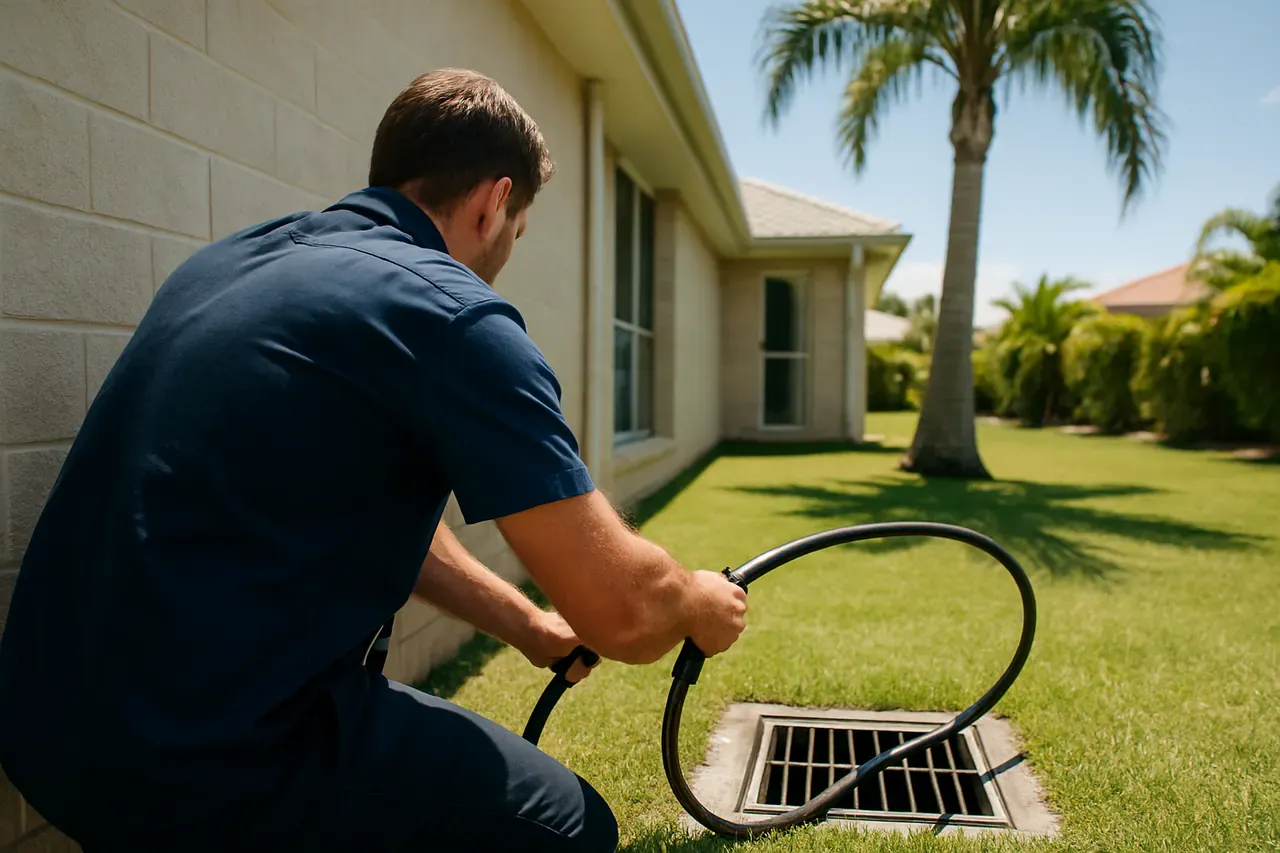
A conventional septic tank settles the solids and sends the liquid to absorption trenches in the yard. The system fails in three ways. The house drains or the outlet to the trenches block, which is cleared like any other drain. The tank fills with sludge because it has not been pumped out in years, which needs a liquid waste contractor and a vacuum truck rather than a plumber. Or the trenches stop absorbing, either because the ground is saturated after the wet season, which passes, or because the trenches have clogged and failed, which does not. The plumber’s job is to work out which of the three it is, clear what can be cleared, and tell you honestly when the answer is a pump-out or a trench replacement.
Aerated wastewater treatment systems
An aerated treatment unit does more work than a septic tank and has more to fail: a blower that aerates the effluent, pumps and float switches that move it between chambers and out to the irrigation area, an alarm that sounds when a level is wrong, and sprinkler lines across the garden. Blowers seize, floats stick, pumps burn out and irrigation lines block, and the alarm going off on a Sunday night in Bonogin is a common call. These systems also have a mandatory servicing schedule; the plumber can repair the mechanical and plumbing components and will tell you if the unit needs its scheduled service from an accredited technician.
The wet season
From December to March the valleys hold water. Creeks rise, the ground stays saturated for weeks, and absorption trenches and irrigation areas that work perfectly in September cannot take another litre. Rainfall and flood warnings are published by the Bureau of Meteorology. Effluent backs up toward the tank and the house, and in the worst cases pools over the trench area. Stop using water where you can, keep people and pets off the wet ground, and call. The plumber checks that nothing else is blocked and that the pumps are working; if the ground simply needs to dry out, that is the honest answer, and if the trenches have failed, you will be told what the options are before anyone spends money.
Tank water: no water in the house
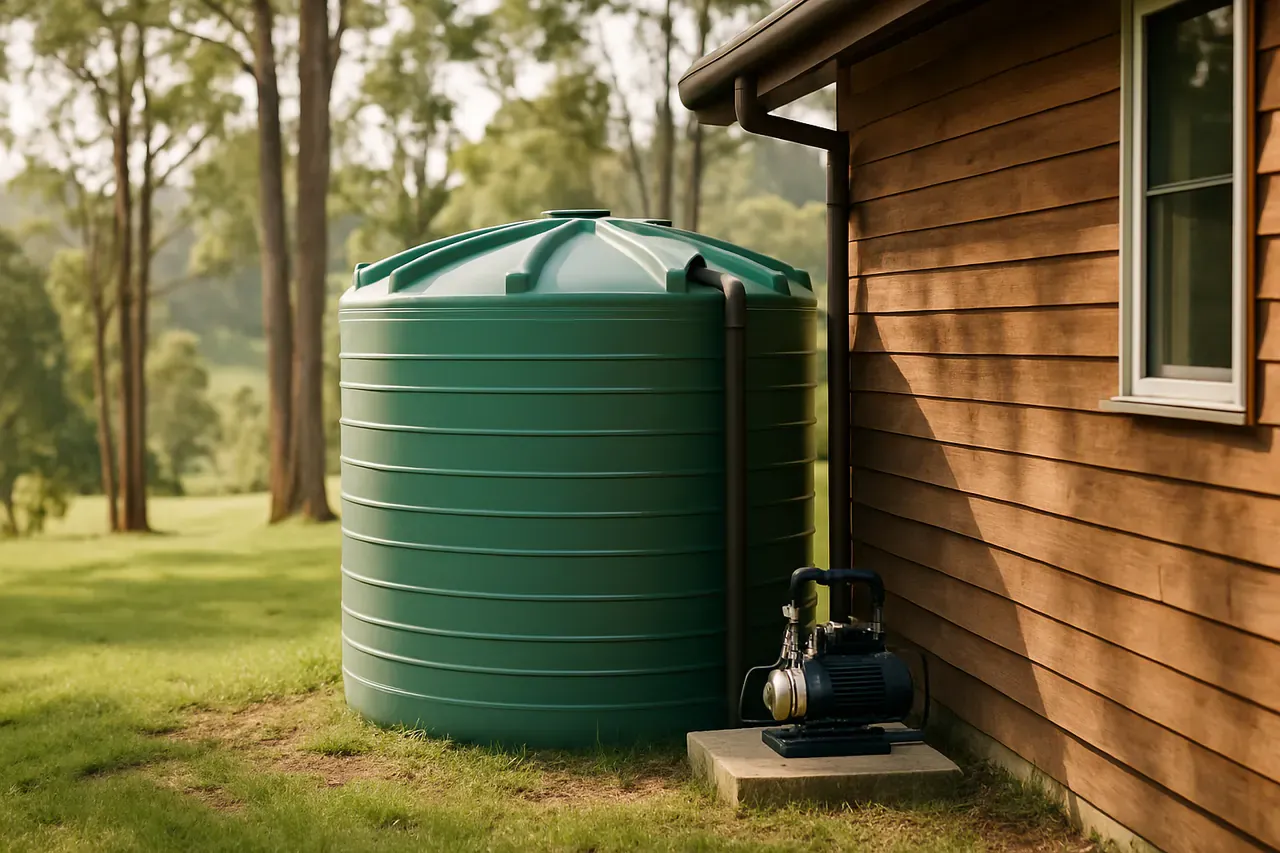
The other half of hinterland plumbing is the water supply. A rainwater tank, a pressure pump with a pressure switch or controller, and one or more filters deliver water to the house, and when the pump fails or the filter blocks the house has nothing: no shower, no flush, no washing machine. Pump repairs and replacements, pressure switches, controllers, filters and the connections at the tank are all plumber’s work and are done on the day where the parts are available. Say in the request that the property is on tank water so the right pump parts come out.
Council requirements
On-site sewage facilities on the Gold Coast are regulated by the City of Gold Coast, which approves new and replacement systems and requires aerated systems to be serviced on a schedule. Repairs to an existing system by a licensed plumber do not normally need approval; replacing a system or altering the trenches does, and the plumber will tell you when the work crosses that line. Keeping the service records for an aerated system matters when you sell.
Prevention
Pump the septic tank out on the interval the size of the household requires, usually every few years, not when it backs up. Keep vehicles, stock and building materials off the trench and irrigation areas. Do not send grease, wipes, sanitary products or harsh chemicals into a septic system; the bacteria that make it work cannot survive them. Have the pumps, filters and floats checked before the wet season as part of a plumbing maintenance inspection, because the wrong time to discover a failed pump is the first week of a February downpour. For blockages in the house drains themselves, see the drain plumber page.
What's included
- Diagnosis of septic tanks, aerated wastewater treatment systems and absorption trenches
- Repairs to pumps, float switches, alarms, blowers and irrigation lines on treatment systems
- Clearing blocked house drains to the tank and blocked outlet lines to the trenches
- Assessment of flooded or failed trenches after heavy rain
- Rainwater tank, pressure pump and filter repairs on properties without town water
- Advice on pump-outs, servicing schedules and council requirements
- Referral for tank pump-outs and system replacements where needed
Signs you should act now
- Toilets and drains are slow or backing up and the property is on septic
- Sewage or grey water is pooling over the trenches or the irrigation area
- The treatment system alarm is sounding or the blower has stopped
- A strong septic smell around the tank or the yard after rain
- There is no water in the house and the property is on a rainwater tank
- The system has not been pumped out or serviced in years
Do not open or enter a septic tank
Septic tanks contain gases that can overcome a person in seconds. If the lid is off or damaged, keep children and pets away and call. The plumber has the equipment and the training to inspect it safely.
What it costs
2026 Gold Coast reference ranges, labour included. The plumber confirms the price in writing before work starts.
| Pressure pump replacement (canal, waterfront or tank-water home) | $650-1,500 |
| Septic or aerated system pump replacement | $700-1,600 |
Frequently asked questions
Which parts of the Gold Coast are on septic rather than town sewer?
Most acreage and rural-residential properties in the hinterland: Tallebudgera Valley, Bonogin, Currumbin Valley, Advancetown, Gilston, Springbrook, Numinbah and Tamborine Mountain, and pockets around Oxenford, Ormeau, Wongawallan and Maudsland. Nerang, Mudgeeraba village and Carrara are largely on town services. If you are not sure, the presence of a tank lid, a trench area or a treatment unit with a blower in the yard is the giveaway.
My septic system is backing up after heavy rain. What is happening?
The absorption trenches are saturated. In the Gold Coast wet season the ground in the valleys holds water for weeks, the trenches cannot absorb the effluent, and it backs up to the tank and the house. Stop using water where you can, and call. The plumber will check that nothing else is blocked; if the trenches have failed rather than flooded, that needs a longer conversation about replacement.
What is the difference between a septic tank and an aerated treatment system?
A septic tank is a passive tank that settles solids and sends liquid to absorption trenches. An aerated wastewater treatment system (AWTS) uses a blower and pumps to treat the effluent to a higher standard and irrigate it onto a garden area; it has electrical components, an alarm and a service requirement. The plumber repairs the pumps, floats, blowers and lines on both; tank pump-outs are done by a liquid waste contractor.
Do you pump out septic tanks?
No. Pump-outs are done by licensed liquid waste contractors with vacuum trucks, and the plumber will tell you when one is needed and can recommend who to call. What the plumber does is everything else: blocked drains to and from the tank, pumps, floats, alarms, outlet lines and the assessment of whether the trenches are flooded or failed.
The property is on tank water and there is no water in the house. Is that a plumber's job?
Yes. No water on a tank property is almost always the pressure pump, its pressure switch or controller, a blocked filter, or an empty tank. The plumber diagnoses and repairs the pump and filters and checks the tank connections. Say in the request that the property is on tank water so the right parts come.